
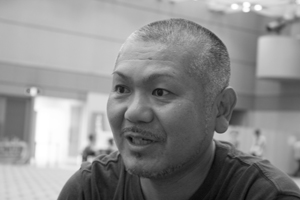
It starts the same with so many brewers in Japan. “I didn’t know anything about making beer.” So it was with Miyashita Hiromichi, of Fujizakura Beer.
His company, eager to enter the emerging craft beer market in 1996, asked him to go to Germany to study. He protested, “I can’t speak German, and I’m not very good with languages, even if I tried.” “Fine,” they said, “we’ll send a translator with you.”
Miyashita reminisces, “I studied in Hiroshima for two months first. There was a brewmaster there who had graduated from a brewing academy in Germany. Then I went to Germany for six weeks. On my return, I spent another two months up in Iwate.”
In the early craft beer days, it seemed everyone wanted to make German-style beers. It was the default beer tradition. Fujizakura, however, came from a different angle.
“Fujizakura’s restaurant is in the forest near Mt. Fuji, and appropriately named Sylvans. My employers wanted people to drink and relax. In addition to a refreshing pils and weizen, they wanted me to learn to make a rauch. The scent of the trees around Sylvans would be reflected in the smokiness of the beer.”
Smoked beers (actually the malt is smoked) are not common in Japan, or the rest of the world for that matter. In fact, it was almost a lost art. They are difficult to make properly, too. But we’ve heard many a discerning beer drinker say Miyashita doesn’t just make one of Japan’s best rauchs; he makes one of the world’s best. Indeed, in 2000 he won a medal at the World Beer Cup for his rauch, and again in 2010 for his rauch bock.
Miyashita laughs, “When I first drank it, I didn’t like it. I thought, ‘this isn’t going to work for me.’ But while I was making it, I grew to appreciate it. In the beginning, our guests, too, would sometimes make a funny face when they drank it. It’s just like young people who think, ‘why are adults drinking this bitter shit’, when they see people drinking beer. But your tastes mature and you grow to like it.”
Ever botched a batch?
“I’ve never screwed up the rauch. But, once I made a mistake while fermenting the weizen. I had learned to do it at 22 degrees, but did it at 24. There’s the saying, ‘failures are the root of success.’ Well, I didn’t want to dump it just yet so I went ahead and made it, and it turned out great.”
For his ‘failed’ weizen, Miyashita won another medal at WBC in 2008. Miyashita admits that the first beer he drank in Germany that really impressed him was a weizen.
“I thought, ‘wow, I can’t believe they’re making this.’ I could taste the spirit of the brewer in the beer. That’s what I try to do now; I want people to recognize my commitment to the beer.”
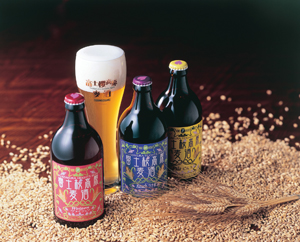
Other styles he brews include the Sakura Bock, Dunkelweizen, smoked weizen, rauch bock, weizen bock, chocolate wheat, Oktoberfest marzen and Oktoberfest Weizen. At Sylvans, Miyashita offers comments and opinions to the chef who then decides which beer would good best with which food. The menu items feature icons of the beers that pair well with them.
Miyashita is often at festivals and enjoys good rapport with his fellow brewers. We asked him if he shares his knowledge with others.
“Of course. The Mojiko Retro brewer came here for about a week. I get a lot of questions about weizens, too. And smoked beers. Conversely, I’ve gone to Sankt Gallen and Ikspiri with questions. There might be people who disapprove of this at the corporate level, but in our industry, we have to share and cooperate.”
TEL:0555-83-2236
www.sylvans.jp
Sylvans
Yamanashi-ken, Minamitsuru-gun, Fujikawaguchiko-machi, Funatsu, aza-Kenmarubi 6663-1
TEL:0555-83-2236
www.sylvans.jp
This article was published in Japan Beer Times # () and is among the limited content available online. Order your copy through our online shop or download the digital version from the iTunes store to access the full contents of this issue.


